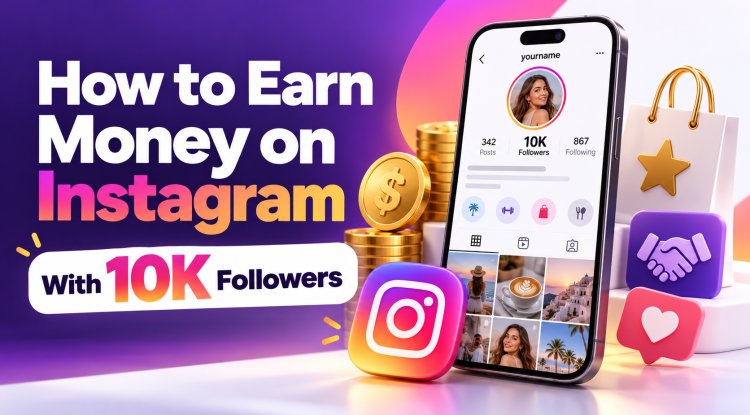
How to earn money from Instagram after 10k followers
How to earn money from Instagram after 10k followers: Find brand deals, affiliate income and easy steps to monetise your audience for Australian creators.
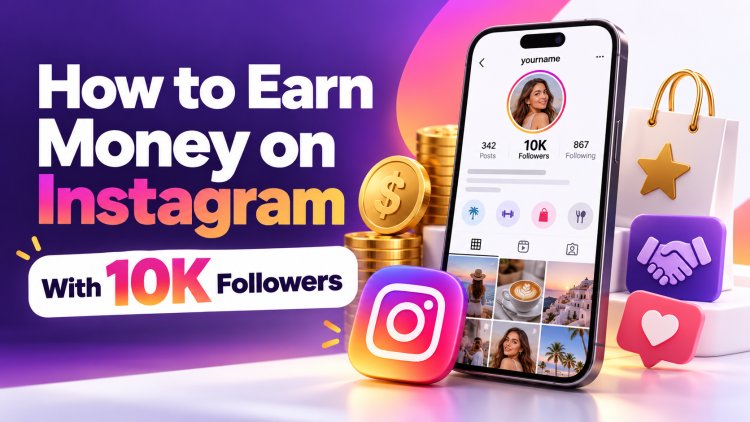
A 10,000-follower milestone can make an account more visible to brands, but it does not trigger an automatic Instagram salary. Your income depends on audience trust, engagement, the offer and the work involved. Engagement rate is the percentage of people who interact with a post, calculated against a stated base such as reach or followers.
A creator might earn a sponsorship fee from a brand, affiliate commission from tracked sales, or money through Instagram’s native monetisation features. You can also sell products or services directly to your audience. Each route needs a clear offer and a reason for people to act.

Key Takeaways
- Followers can attract attention, but they do not guarantee payment.
- Audience trust and the work required shape what an offer can earn.
- Income can come from brands, referrals, platform features or your own offers.
- Follower thresholds and earning routes are different things.
- Set up the key distinction between follower thresholds and earning routes before explaining how each route works.
How to earn money from Instagram after 10k followers
At 10,000 followers, the practical next step is to connect a clear offer to the audience that already responds to your posts. Followers alone do not create money; a buyer, brand or fan must take an action that earns you income.
Instagram may pay eligible creators through native monetisation features, but many creators earn outside the platform. A brand can pay a sponsorship fee for a campaign. An affiliate programme can pay commission on tracked purchases, while your own product or service earns revenue from customers. Your account does not receive a standard wage just for reaching a follower count.
A follower milestone is not a salary. Income begins when an audience takes an action tied to an offer or eligible feature.

To estimate possible returns, start with the actions that lead to payment. For affiliate income, multiply link clicks by the purchase rate and commission. If 100 people click, 3 buy, and the commission is $10, the illustrative total is $30.
For your own offer, multiply completed sales by the product price. Ten sales of a $25 item would mean $250 in gross revenue before costs, refunds or tax. These examples show the calculation only, not an expected result.
The same follower count can produce very different outcomes. A smaller, interested audience may click and buy more often than a larger audience that rarely responds. Your niche, offer and content all affect that response.
You can learn how to earn money from Instagram after 10k followers without relying on brand deals. Affiliate offers, services and products do not depend on sponsorships, though each still needs an audience willing to act. Move from the broad earning routes to the different follower and account thresholds that apply to them.
Do you need 10,000 followers to start earning?
Ten thousand followers is a useful milestone for some features, not a universal entry requirement for earning. Several routes can work with a small following, and off-platform offers have no universal Instagram minimum.
Eligibility and feature availability vary by account and country. Instagram Gifts eligibility is listed from 500 followers for a professional account, while Subscriptions eligibility is listed from 10,000 followers for a professional account. The Creator Marketplace requires creators to be at least 18 and to follow Instagram’s monetisation policies.

| Route | Stated follower threshold | What the threshold means |
|---|---|---|
| Gifts | 500 followers | Listed eligibility for a professional account |
| Subscriptions | 10,000 followers | Listed eligibility for a professional account |
| Creator Marketplace | No follower figure stated | Creators must be at least 18 and follow monetisation policies |
| Affiliate links or services | No universal minimum | Brands set their own criteria for campaigns |
People asking how to make money on Instagram with how many followers should focus on who responds, not just the count. A few engaged followers may be more useful than a large inactive audience, especially when you offer a service or recommend something relevant.
Before relying on an Instagram feature, check these three points:
- Professional account status
- Your age and the feature’s age rules
- Country availability for your account
Affiliate links and your own offers can sit outside Instagram’s built-in features. If you have no followers yet, build an audience through other channels or sell to people you already know, then use Instagram to support that relationship. Having a route available is only the first step, so next explain how to turn an audience into a paid brand partnership.
How do you get paid brand partnerships?
A brand is paying for a fit with its customers and a defined piece of work, not simply a follower total. Audience fit and the campaign brief can make two accounts with similar followers worth different fees.
Set a quote around the content and rights the brand wants. A single post is different from several posts, a long campaign or permission to reuse content in paid ads. Agree the campaign fee in AUD, since published examples are not Australia-specific and do not consistently state a currency.
Set a rate that reflects your audience and the work
These sponsored-post estimates offer rough negotiation context, not guaranteed Australian rates. They do not account for every niche, format or campaign requirement.
| Creator tier or follower range | Indicative post fee | Pricing caveat |
|---|---|---|
| Nano, about 1,000-10,000 followers | $10-$100 | Estimate varies by audience and work |
| 10,000-50,000 followers | $100-$500 | Not a guaranteed Australian rate |
| Around 100,000 followers | $1,000-$5,000 | Published examples may use another currency |
| Around 500,000 followers | $3,000-$10,000 | Campaign terms can change the quote |
| Around 1 million followers | $5,000-$25,000 | Creators with several million can reach $50,000 or more per post |
Price for niche fit, engagement, deliverables, usage rights, exclusivity and campaign length. A brand asking for six months of paid-ad use needs a different quote from one buying a single post with no reuse rights.
Find brands and pitch a clear offer
Prepare a concise media kit with your follower count, audience demographics, engagement and examples of relevant posts. Research the brand’s products and marketing before contacting its team. You can tag relevant brands naturally in suitable posts, rather than turning every caption into a sales pitch.
Creator Marketplace participants must be at least 18 and meet Instagram’s Partner Monetisation Policies, Community Guidelines and Content Monetisation Policies. Check your account’s eligibility if you want to use that route.
A useful pitch covers four points:
- Audience fit: who follows you and why they suit the brand
- Proposed content: the idea and its purpose
- Deliverables: formats, dates and number of posts
- Fee or next step: your AUD quote or a meeting request
Repeated promotions that feel inauthentic can weaken audience trust. Choose campaigns that make sense beside your usual content, and be clear about the work and rights included. A brand may also pay for content without asking you to post it, which is the next route to consider.
Can you earn from UGC without a large following?
A creator with a small account can still sell a brand the skill of making useful, natural-looking photos or video. Production skill, rather than follower count, is the main deliverable when the brand wants content for its own channels.
A brand may pay for photos, demonstrations, testimonials or short videos to publish on its account or use in advertising. For example, you could film a genuine product demonstration, then supply the agreed video files and still images. The brand receives content; your audience does not need to see the post.
Build a small portfolio that shows a few styles and formats. You might include a close-up product demonstration, a short voiceover and a straightforward testimonial. Make clear that sample work is illustrative if the brand did not commission it.
Agree the usage period, paid-ad rights, revisions, exclusivity and any posting requirement before work begins. A brand asking to use a video for ads has a different need from one seeking a single organic post. Put the agreed deliverables and rights in writing so both sides know what the fee covers.
Be honest about your experience. Do not make product claims you cannot support, or pretend you have used something you have not tried. Natural-looking content only works when the recommendation is truthful and the creator can stand behind what they say.
Think about the time required to plan, film, edit and revise each piece. A short video may still involve several rounds of work, so define how many revisions the fee includes. When the creator recommends a product to their own audience instead, payment is usually tied to tracked sales rather than content production.
How does affiliate marketing work on Instagram?
Affiliate marketing pays a commission when someone buys through a link or code assigned to the creator. The sale is tracked back to that referral, rather than paid as a sponsorship fee for making a post.
Programmes usually give you a unique link, a promo code, or both. Their attribution terms decide which sale counts for you, how long a referral is tracked and when commission is paid. Commission rates commonly range from 5%-30%, depending on the programme and product, but that is a general guide, not a guaranteed rate.
Choose a relevant programme and track sales
Choose products that fit your content and audience, then read the programme terms before sharing them. A code may suit people who prefer to shop later, while a link can take someone straight to a product page. Keep a record of clicks and completed sales so you can see which recommendations lead to action.
Instagram announced in April 2026 that eligible creators would be able to earn affiliate commissions by tagging products in Reels. The rollout covers creators aged 18 or older with at least 1,000 followers and products in Meta’s brand catalogue.
Make recommendations easy to act on
Recommend products you genuinely know, and show them in use where that helps people understand the value. A useful caption answers a likely question, such as which size you use or what a product can and cannot do.
Put a clickable link in your bio or use an available Story link sticker. Instagram’s Reels product-tagging option covers products in Meta’s brand catalogue. Check current eligibility in your professional dashboard before relying on that feature, since access can depend on the rollout.
Avoid sharing a trail of unrelated links that makes the next step unclear. Give each post one relevant action, then check clicks and sales to see whether the recommendation helped. Affiliate income can take time to build because a click only earns when it meets the programme’s tracking rules and leads to a qualifying purchase. A product recommendation earns only when people act, while Instagram’s built-in features offer other ways for fans to pay directly.
Which Instagram monetisation features can pay creators directly?
Instagram does not pay one standard rate for every view, but eligible accounts can earn through several in-app features. Direct income may come from subscribers, fan contributions or limited bonus opportunities.
Subscriptions can provide recurring income, while bonuses are invite-only and should not anchor a budget. The value of each feature depends on eligibility and whether your audience chooses to pay or engage with eligible content.
| Feature | Payment mechanism | Key limitation |
|---|---|---|
| Subscriptions | Recurring monthly subscriber price | Requires ongoing value for subscribers |
| Gifts | Fans send Stars on eligible content | Income depends on audience support |
| Live Badges | Fans buy Badges during eligible Lives | Support is tied to live participation |
| Bonuses | Payment for eligible content under an opportunity | Invite-only, limited and may be seasonal |
Subscriptions provide recurring income
Eligible creators can set a recurring monthly Subscription price from $0.99 to $99.99. You might offer exclusive posts, Stories, Reels, Lives or chats. Choose benefits you can keep delivering, such as a regular Q&A or useful subscriber-only updates.
Subscribers need a reason to renew. A price alone does not create value, and an offer that takes too much time to maintain can become hard to sustain. Set a realistic schedule and explain what members receive before they join.
Gifts and Badges let fans contribute
Instagram Gifts pay $0.01 per Star. Fans can send Stars on eligible content as a way to support a creator they enjoy. Live Badges are offered in $0.99, $1.99 and $4.99 increments, letting viewers contribute during eligible Lives.
These features work best when they fit the content, rather than interrupting it. A creator can thank supporters without suggesting that every viewer needs to pay. Audience support may vary from one post or Live to another.
Bonuses depend on an invitation
Bonuses are invite-only, and opportunities may be seasonal. Past participants have reported roughly $0.01-$0.05 per 1,000 views, but there is no single published rate and amounts vary. Some opportunities can count up to 150 eligible posts from activation to the end of the opportunity.
How much does Instagram pay for 1,000 views? There is no fixed rate; past bonus reports range from $0.01-$0.05 per 1,000 views and are not a promise of future earnings. Views alone do not guarantee a bonus or income. Creators who want more control over their income can make and sell an offer of their own.
What digital products can you sell to your audience?
A small digital product works best when it solves one problem the audience already asks about. Start with a need, then choose a format that makes the answer easy to use.
A guide or ebook can explain a process, while a template or preset gives buyers a starting point they can adapt. A workbook can help someone practise a skill. A short course suits a topic that needs more explanation than a download can offer.
Match the product to a real question in your comments or messages. If people often ask how you plan weekly meals, a simple planning template may help more than a long general ebook. Make the outcome specific, so buyers know what they will be able to do.
A digital product earns only when someone completes a purchase, so describe its value clearly before checkout. A basic path is an Instagram post that explains the problem, a bio link to a checkout page, and automatic digital delivery after payment.
For a simple estimate, multiply your chosen price by completed sales. If you set a $20 price and make five sales, gross revenue is $100 before costs, refunds or tax. That is an illustration of the arithmetic, not a forecast of what your audience will buy.
Before launch, check three things:
- Clear outcome: the buyer knows what problem it helps solve
- Usable sample: people can see a page or feature before buying
- Simple delivery and refund process: buyers know what happens after checkout
Keep the first version manageable. You can learn from questions, refunds and feedback, then improve the next version without building a large product before you know what people need. If the creator's value is personal expertise rather than a downloadable resource, a service may be a better first offer.
Can you sell services or coaching through Instagram?
A service can be the quickest offer to test when people already ask the creator for help with a skill. Start with one outcome, such as a stronger set of product photos or a clearer Instagram marketing plan.
Services could include coaching, photography, caption writing or Instagram marketing consulting. Indicative fees for Instagram marketing, consulting and related freelance services are $20-$50 an hour; caption-writing work can reach about $100, depending on scope. These are not guaranteed Australian rates.
Scope and experience affect fees, so define the work before quoting. Identify the target client, the result you will help them reach, the deliverables, session length and any follow-up. A one-off review needs different preparation from ongoing support across several weeks.
Set clear limits on what the service includes and how much delivery time you can take on. Without those boundaries, a small offer can expand into unpaid calls, extra edits or messages outside the agreed work.
Route interested people to a booking conversation through a bio link, pinned post or clear enquiry prompt. State who the service suits and what someone should send when they get in touch. That gives potential clients a useful first step without promising that every enquiry will become paid work.
Think about capacity before promoting the offer. If each client needs several hours of preparation and follow-up, set a sensible number of sessions so selling does not take all the time available to create content. Keep space for existing commitments and respond to enquiries within a schedule you can maintain. Creators selling physical goods need a different setup, especially for catalogue, checkout and fulfilment.
How do you sell physical products on Instagram?
A product catalogue makes it easier for someone to move from a post showing an item to product details. A Shop can shorten that path, while an external checkout can still handle the sale.
Instagram Shop availability varies by country. Checkout options and Shop access can also depend on account eligibility, so keep a working bio link to your business website as a fallback.
Set up an Instagram Shop
Setting up an Instagram Shop involves five steps:
- Use a business account.
- Connect a Facebook Page.
- Upload a product catalogue.
- Complete the account review.
- Turn on Shopping if it is available to your account.
Make each product listing clear, with useful images, an accurate description and a price. Product tags can connect a post or other eligible content to an item in the catalogue, giving interested viewers a route to its details.
Choose fulfilment that suits the business
Holding stock gives you direct control over packing and dispatch, but it takes space and ties up money in inventory. Dropshipping avoids storing stock, but leaves you dependent on the supplier for fulfilment and product quality. Tell customers clearly how orders are handled and when they can expect updates.
Do not treat a catalogue as a substitute for a working sales process. Check that product details match what you can supply, and keep the website link active if a Shop feature is unavailable. An external checkout can take over when Instagram does not support the purchase route for your account or country.
Product photos and descriptions should match the item that arrives. If colour, size or materials matter, include those details to reduce confusion. Revisit stock availability and prices when they change, so a tagged post does not send buyers to an out-of-date listing. Reels can help people discover those products, even when the purchase happens somewhere else.
Can Instagram Reels help you earn money?
Yes, Reels can contribute to income, but a view becomes valuable only when it leads to a relevant action. Reels are a format, not a guaranteed payment scheme, and views alone do not promise earnings.
They can support sponsored content, user-generated content (UGC), product discovery, affiliate recommendations and traffic to an offer. A useful Reel makes the value easy to understand, then points interested viewers towards a suitable next step.
How to earn money from Instagram Reels
Use a Reel to show a product in context, explain a service or introduce an offer. A brand may pay for a sponsored post, or pay for content to use elsewhere. Affiliate recommendations can also work when a viewer follows a tracked link and makes a qualifying purchase.
Views can bring attention, but only a relevant action can connect that attention to income. Choose one goal for each post, such as visiting a product page or asking about a service, rather than trying to sell several things at once.
Turn attention into a next step
Give viewers one clear action, such as using a Story link sticker, visiting your bio link or sending a specific enquiry. The linked page should match the Reel, so a person who taps for a product demonstration lands on that product, not a crowded homepage.
The old 10,000-follower threshold for Story swipe-up links has been replaced by link stickers that accounts can use at any follower count. You can point viewers to relevant pages without waiting for that milestone.
Check whether the next step works on a phone and answers the question raised in the Reel. A broken link or vague landing page can lose the interest the content created. Whether that action happens depends on reaching the right people and giving them a reason to respond.
How do you grow an audience that is likely to buy?
Buyers and brands are more likely to respond when an account consistently serves a clear, recognisable audience. Relevance matters more than chasing a follower count that does not fit your offer.
Pick a defined niche, then publish useful content consistently. Reply to genuine comments, start conversations and cross-promote to platforms where your audience already spends time. These habits help people understand what your account is for and whether it is worth following.
Focus on a recognisable niche and useful content
Review Instagram Insights for reach, profile visits and interactions. Those measures show whether people discover a post, look at the account and respond. A post that earns saves or thoughtful replies may help more than one that collects passive views but sends nobody to your profile.
Compare engagement rate using the same denominator each time. If you calculate it against reach for one post, do not compare it with a figure based on followers for another. A consistent base makes changes easier to read.
Use audience questions to shape future posts. If several people ask how a tool works, show one practical example rather than repeating a broad sales claim. Useful posts give people a reason to return and help you see which topics lead to profile visits or enquiries.
Use a feature account with care
Feature accounts curate posts from creators within a niche, then share selected content with their own audience. A paid placement may put your work in front of new people, but exposure does not promise followers or sales.
Before paying, check how the account credits creators, whether its audience suits your niche and whether you have permission for the content it plans to share. Paid feature-account placements are listed at about $15-$30 per post, a decision point rather than a guarantee of growth.
Consider whether the placement could bring the right people to your account, not just a short spike in views. Follow up by checking profile visits and interactions. Once attention is growing, simple measures can show which earning route is worth more of the creator's effort.
Which Instagram metrics show whether monetisation is working?
A post can attract views without producing a single sale, so track the steps between discovery and payment. Each metric shows a different step, from first reach to a completed sale or enquiry.
Likes and views alone do not show whether an offer converts. Use your own baseline rather than a universal target, because conversion rates vary by niche and offer. Compare similar posts and routes to see where people stop responding.
| Metric | What it tells you | Next decision |
|---|---|---|
| Reach and profile visits | Whether content brings people to the account | Improve the post or profile path |
| Saves and replies | Whether people find the content useful enough to keep or discuss | Make related content or answer questions |
| Link clicks | Whether viewers take the next step | Check the call to action and linked page |
| Completed sales or enquiries | Whether attention turns into a possible customer | Review the offer, checkout or response process |
Track results once a month in a simple record. Note the post, clicks, sales, gross revenue and costs. Compare each month with the previous month, while accounting for changes to the offer or content that could affect the result.
A high number of profile visits with few clicks may point to an unclear bio link or offer. Plenty of clicks with few sales may mean the landing page needs attention, or the offer does not meet the expectation set by the post.
Keep the measures tied to your goal. If you want service enquiries, record those enquiries and whether they turn into paid work. If you sell a product, track completed sales and costs instead of treating likes as income. Use those measures to choose one or two income routes, then protect the trust that makes them work.
What should Australian creators check before monetising?
Before a creator accepts payment or promotes a product, the audience should be able to recognise the commercial relationship. Clear disclosure helps people understand when money, a gift or an affiliate arrangement sits behind a recommendation.
Identify paid partnerships, gifted promotions and affiliate relationships wherever people see the recommendation, including posts, Stories and DMs. Do not disguise advertising as an independent recommendation or make product claims you cannot support.
Keep the commercial relationship clear and the promotion truthful. A clear disclosure should appear with the content or message, not somewhere a person is unlikely to notice.
People should be able to recognise when a post or message is commercial, and claims should match what you can support.
Make promotions and affiliate links clear
Use wording that makes the relationship easy to understand. If a brand paid for a post, say so. If you received a product or could earn affiliate commission, make that clear beside the recommendation. A vague tag or hidden disclosure may not tell someone why the content is appearing.
Keep records and review platform terms
Keep records of income, fees and business expenses. Check current ATO guidance for tax obligations, since individual responsibilities depend on your circumstances. Keep invoices, payment records and expense details organised so you can review the activity later.
Instagram’s monetisation policies and country availability can change. Review the current terms and your account status in the professional dashboard before relying on a feature. Do not assume a feature available to another account is available to yours.
Before launch, use this short list:
- Choose one offer.
- State its value and price.
- Test the customer path.
- Record the result.
Hand off to a simple first action: choose one offer and test it with the people who already respond.
Conclusion
Ten thousand followers can create opportunities, but a clear offer and a trusted audience are what give those opportunities a chance to earn. A follower count is not an automatic paycheque, and waiting for a larger one can delay a useful test.
Choose one offer that fits the people who already respond. Publish a post that explains its value and gives them a clear next step. Then track the clicks, enquiries or sales it produces, and use the result to decide what to adjust.
Your first test can be small. It still gives you a real measure of whether the audience understands the offer and wants it. Select the offer to test this week and record its results.
FAQ
How much can I earn on Instagram with 10,000 followers?
What is the 5-3-1 rule for Instagram?
What is a good engagement rate on Instagram?
How to get 20,000 followers on Instagram?
How much do 200k followers pay on Instagram?
How to get 30 followers a day?
Is it illegal to buy followers?
How much do 1000 IG followers cost?
What's Your Reaction?